Community-led
As the Barrow to Esk project is community-led its focus is on identifying and developing routes for community benefit in conjunction with landowners and other stakeholders. A key consideration is ensuring the route will be accessible for all.
Partnership Working
The project is working in conjunction with the local authorities, LDNPA, Cumbria Tourism, Natural England, and Walk Wheel Cycle Trust (WWCT, formerly Sustrans) to identify and develop routes. Note that several of these organisations proposed route outlines nearly 20 years ago which were not developed.
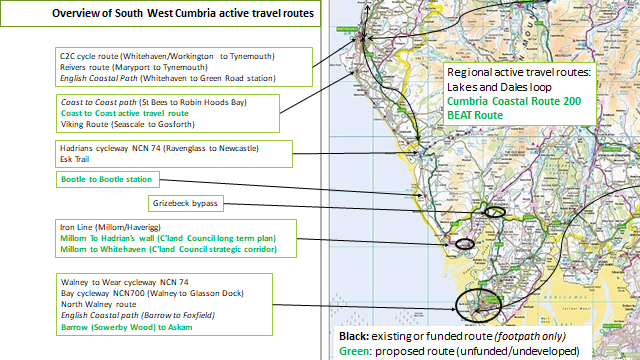
All of these organisations have identified strategic corridors through our area, as seen in the map above, to meet government objectives. However, these organisations have not yet identified specific routes.





Our project can provide the local input to ensure the optimum routes are developed to meet the needs and aspirations of the community.
Work is underway
Community Investment Funding to support the BEAT Route project was awarded to Walk Wheel Cycle Trust by the South Copeland GDF Community Partnership. The project will undertake feasibility work on two sections of the proposed route: Millom to Silecroft and Millom to The Green. This work commenced in June 2026 and should conclude by summer 2027.
Walk Wheel Cycle Trust have 40+ years experience developing the National Cycle Network. Developing work in short sections is more manageable for route optioneering, allows benefits to be seen more quickly and funding to be targeted.
Stage 1: Route Optioneering: Route options will identify a preferred alignment via a robust multi-criteria analysis, prepare a concept design, conduct land ownership enquiries, and develop high level costings for the preferred alignment. Route visualisations will be part of this work to support further campaigning, fund assembly and advocacy. This work will follow Active Travel England’s Rural Delivery Roadmap and adopt a community first approach. Stage 1 provides a package of deliverables which can be used to approach a range of funders, allowing the area to compete with larger towns and cities. By completing the initial design, landowner approach and costing work, the scheme is de-risked, and as such is a more attractive proposition for capital funders.
Stage 2: Detailed design, costing and route construction: In Stage 2 funding is sought to develop the concept design into a technical package of work that will form the basis of a construction tender package, undertaking the legal processes required to create the route (such as upgraded or new Right of Way designations), and agreeing with local authorities and partners the adoption and ownership of the asset. With this in place, the route can be constructed.
Millom to Silecroft
This route will connect with the Millom Town Deal improvements to link these communities for access to schools, work, facilities, public transport and leisure. The English Coastal Path goes between these communities but it is not a practicable route for most residents and there are no other active travel options segregated from traffic between these communities. As the Millom disability group told us, ‘Many of our families rely on wheelchairs, mobility scooters, pushchairs, or other mobility aids. The current lack of suitable traffic free paths often restricts our ability to participate in the mentaland physical health benefits of being outdoors’.
Millom to The Green
This route will connect with the Millom Town Deal improvements to link these communities for access to schools, work, facilities, public transport and leisure. As a resident told us ‘I’ve 2 children who enjoy their bikes but I don’t want them to cycle on the roads with dangerous drivers’
Kirkby to Askam
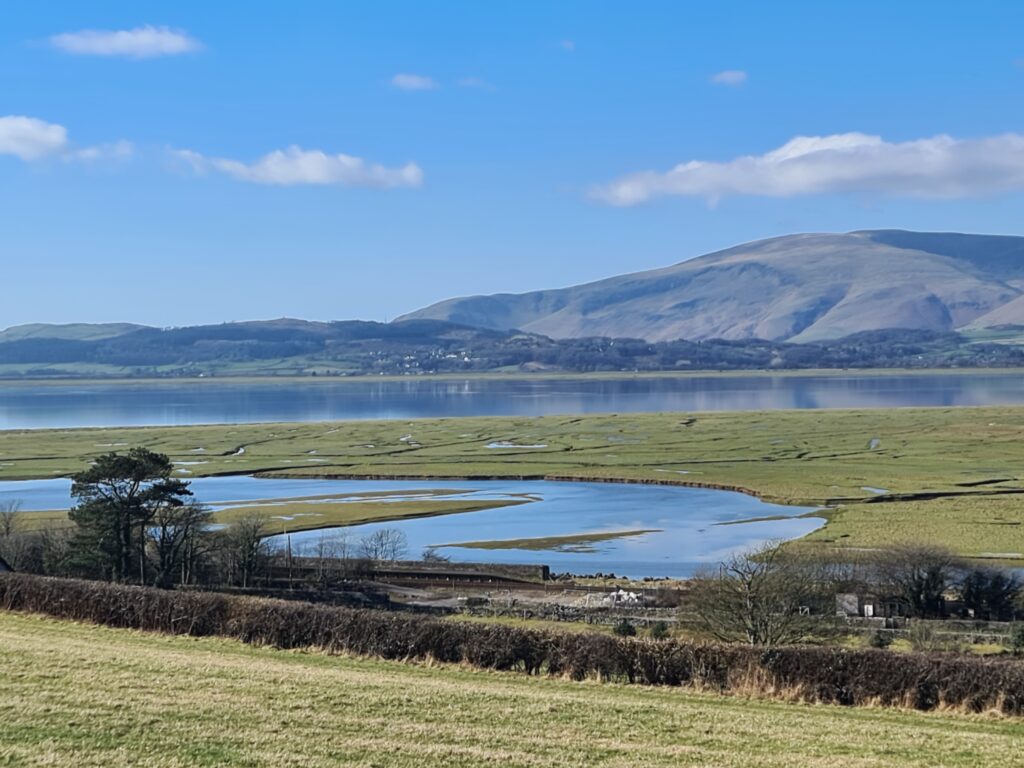
The English Coastal Path goes between these communities but it is a footpath and so will not be a practicable route for wheeling. Also, it is subject to flooding at high tides. There are no other active travel options segregated from traffic between these communities: one Kirkby resident told us ‘I had to learn to drive as it wasn’t safe to walk anywhere beyond Kirkby with 2 children’.
Broughton in Furness to Duddon River Crossing
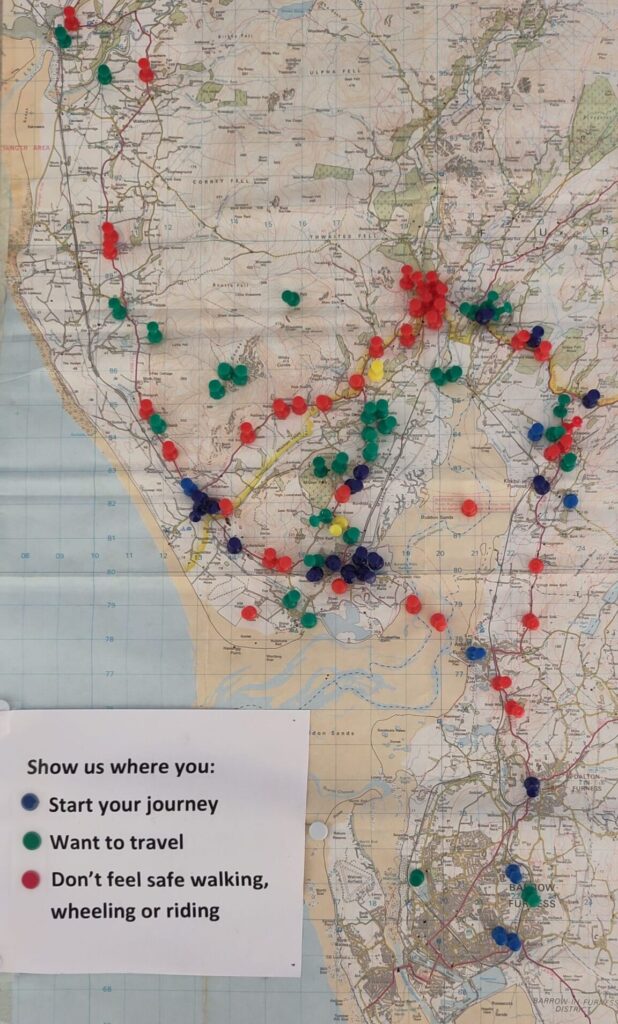
Residents have identified a stretch of the A595 (High Cross Hill) as a high hazard section with no alternative to the fast A road. This is represented in the concentration of red pins in the top right corner of the map ‘pinned’ at Thwaites and Kirkby galas in June 2026.
Silecroft to Bootle and Bootle to Ravenglass
The route will extend access to Bootle and then to Ravenglass, for which a crossing of the Esk River is required. From Ravenglass there is National Cycle Network route 72 (Hadrian’s Wall) to Carlisle and on to Newcastle. This route also links to the National Cycle Network C2C route from Whitehaven or Workington across to Tynemouth or Sunderland.
River crossings
Separate work has been started on options for river crossings (the Irt and the Duddon) by Natural England through Cumberland Council. The project team will work with these organisations as appropriate to ensure route connections align. There has also been a privately funded study for an Esk crossing which has been considered by the project.
You can reach out to us at: BEATroute2@gmail.com